Art · aubertlone

One photograph, then code.

Every picture on this site is procedural. The flowers descend from a 2014 phone photo of an origami bouquet, rebuilt as geometry so they can be anything. The cloud was never photographed at all: it is computed from the physics of light. No stock, no AI imagery.

Paper Flowers

The photograph

In 2014 I photographed a bouquet of kusudama flowers, each one five paper cones glued into a ball, on a phone. Someone else is in the frame, so the photo itself never appears. Everything on this site that looks like a paper flower descends from it: the colours, the arrangement, the way a rolled petal catches light.

Palette-true vector trace of the original bouquet photograph
Palette-true vector trace of the original bouquet photograph, on logo blue
The first step was a faithful vector trace. The pixels are quantised to thirty-six paper colours, each colour traced on its own and kept as its own group, so a whole family of petals can be recoloured with one edit, and everything outside the bouquet becomes a single flat field, paper or logo blue. These two traces are as close to the photograph as the site gets.

One flower, seventeen papers

Then the flower was rebuilt from nothing. Five petals at 72°, each a cone with a rolled lip, drawn in six flat cel tones: base, shadow, mouth, wall, highlight and line. All six come from one hex in HLS space, with shadows bent toward blue, except the yellows and limes, which bend toward orange, because a blue bend takes yellow through olive. The palette is the photograph’s own, found by clustering its paper pixels and lifted a little, since the photo was underexposed.

pinkpinkhot pinkhot pinkmagentamagentaredredorangeorangepeachpeachyellowyellowcreamcreamlimelimegreengreenmintminttealtealcyancyanskyskyroyalroyalnavynavypurplepurplelogo bluelogo blue

The layouts

Many flowers need a rule for where each one goes. These are the rules, each shown once as a study. The two that became covers, Saturater and Sol Mara, live on the Music page with their releases.
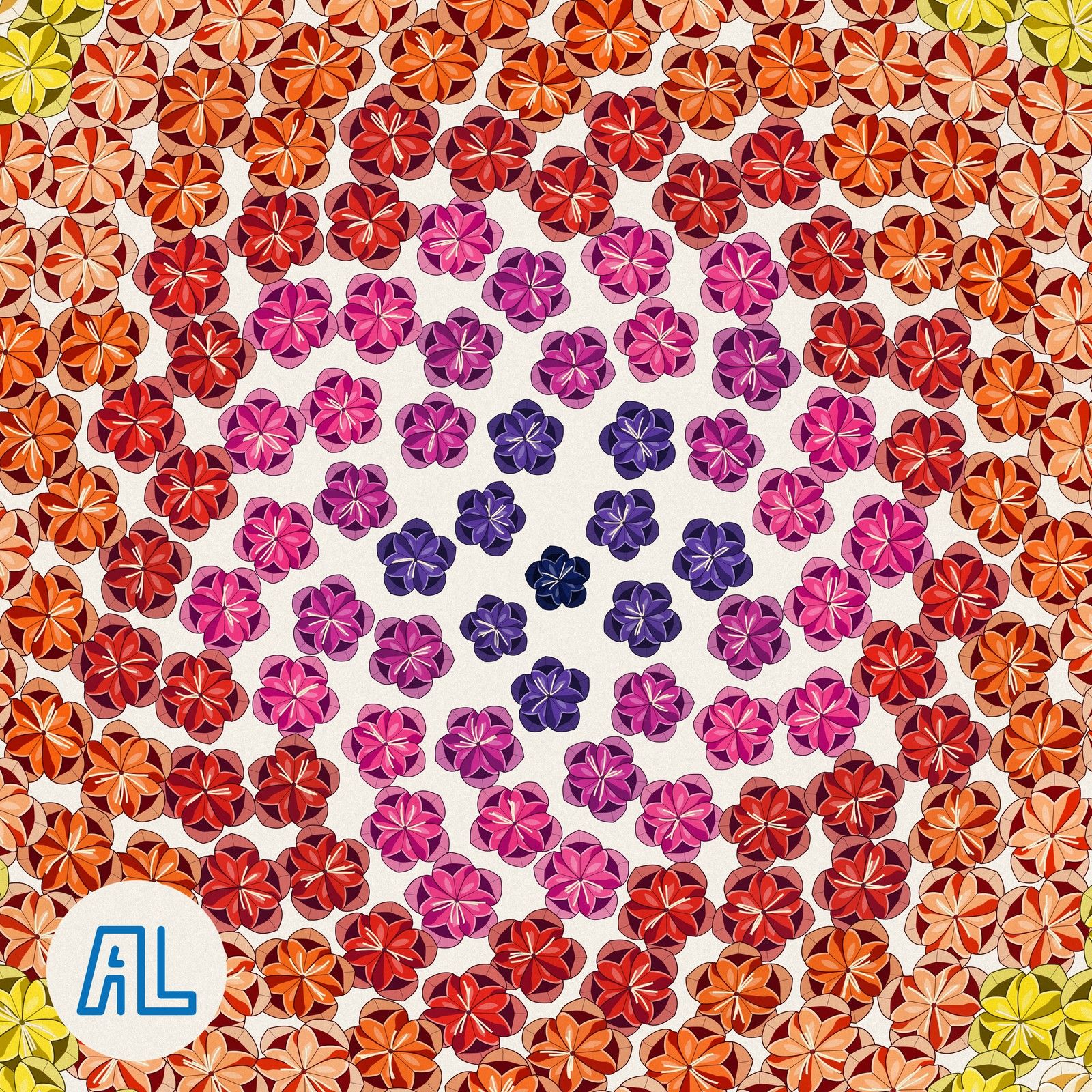
  • A dense head of paper flowers in a sunflower spiral, navy at the centre through magenta and orange to yellow at the corners
    Vogel phyllotaxis Flower n sits at radius √n and angle n × 137.508°, the golden angle. Sizes follow the local spacing; here the colour runs in radial bands, like a dahlia.
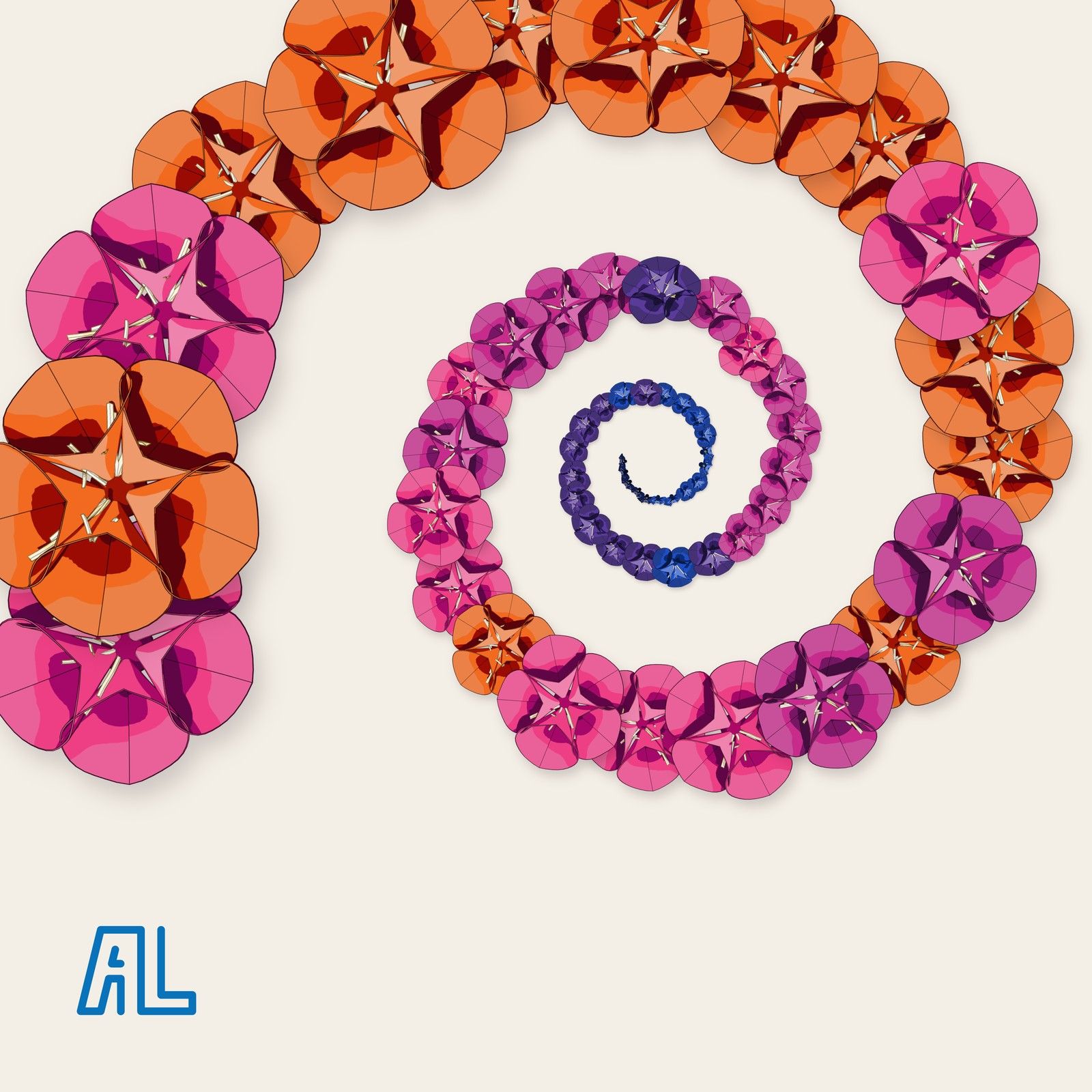
  • Paper flowers along a single logarithmic spiral arm on paper, large at the rim and tiny at the centre
    Log spiral A nautilus arm: every flower a constant ratio further out than the last, so the arm shrinks inward without ever ending.

  • A wreath of paper flowers in a hue sweep on paper, open in the middle
    Wreath Flowers on a ring, each leaning outward, the hue sweeping once around the circle.
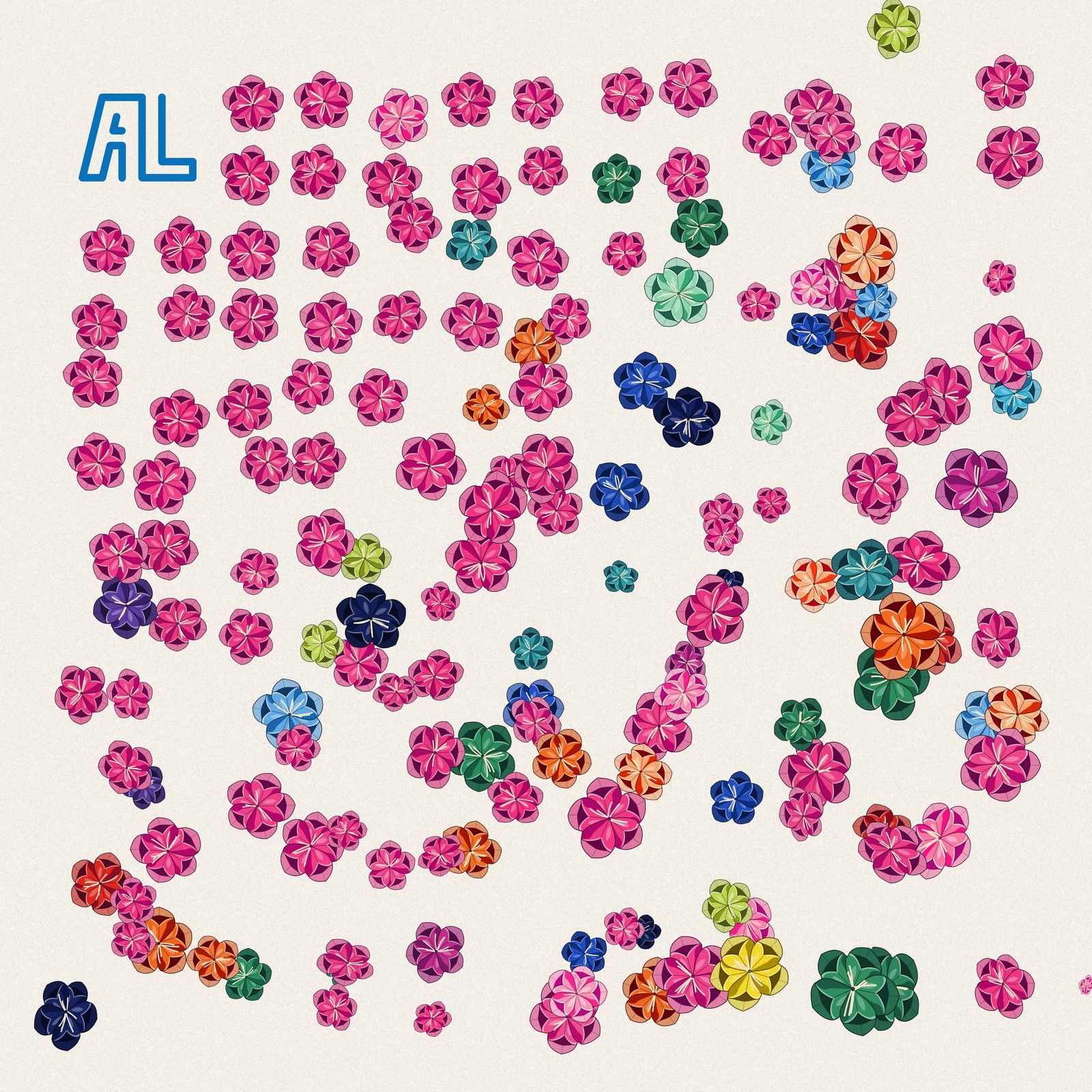
  • A grid of hot-pink paper flowers that is orderly at the top left and dissolves into scattered, mixed colours at the bottom right
    Schotter A 13 × 13 grid whose jitter, rotation, scale and colour chaos all grow from the top-left corner to the bottom-right, after Georg Nees’s 1968 plotter piece of the same name.
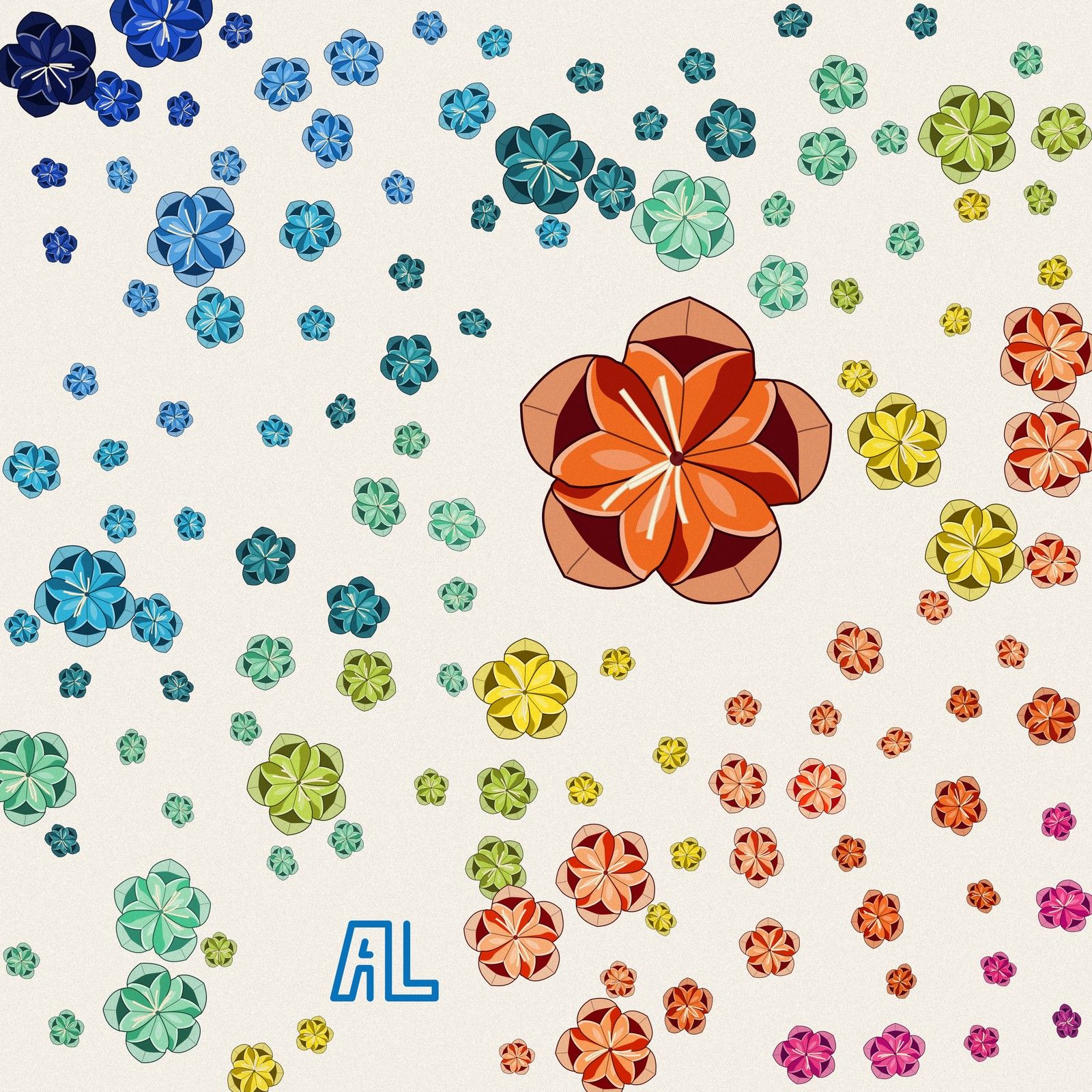
  • Paper flowers of three sizes scattered evenly across paper, colour shifting diagonally from navy to magenta, with one large flower off centre
    Poisson scatter Poisson-disk sampling keeps every flower a minimum distance from its neighbours, which is why random here reads as even rather than clumped. One hero flower clears the ground beneath it.
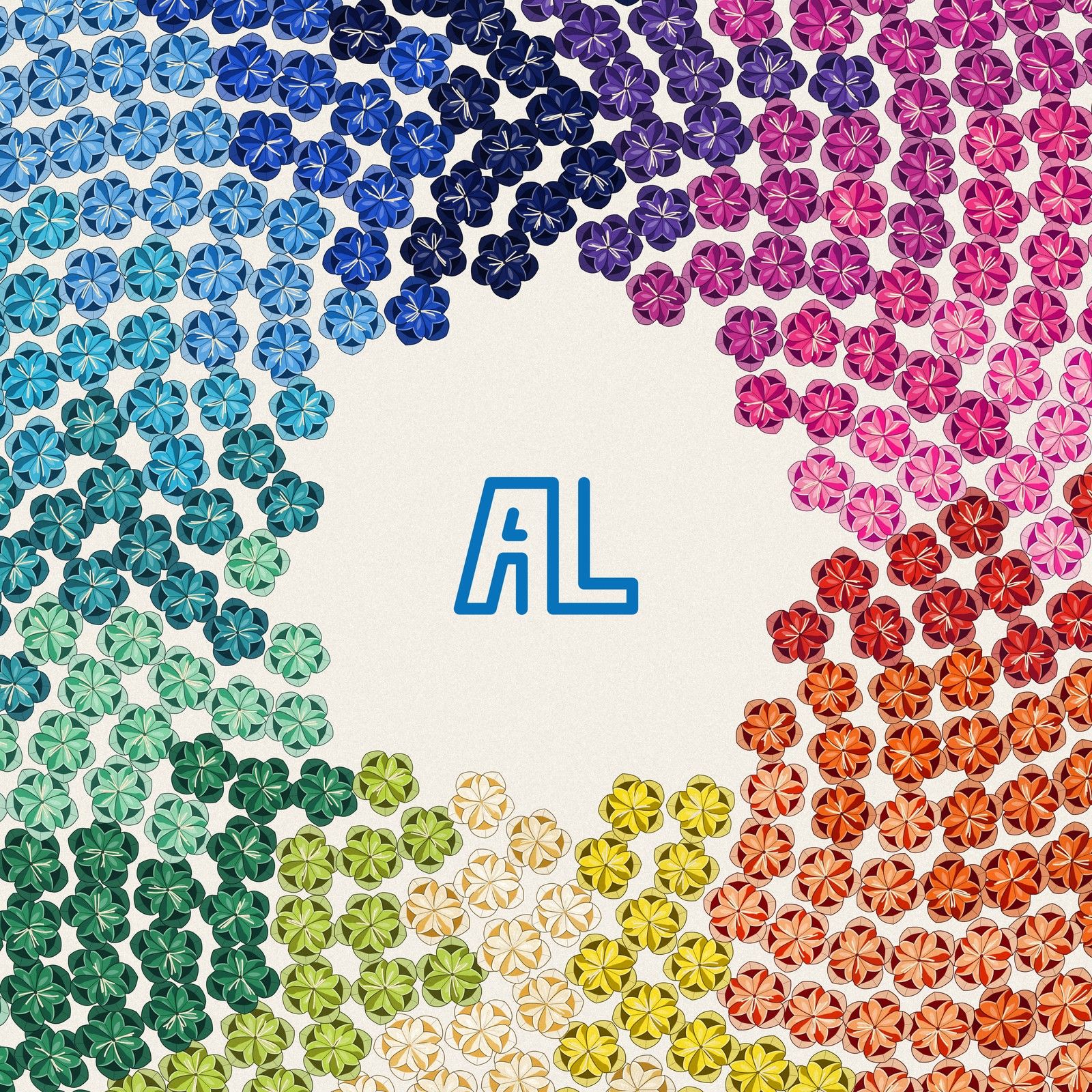
  • A ring of paper flowers on paper whose colour runs through the whole palette around the circle
    Rainbow sweep The Vogel head again, cropped to a ring, with the colour running around the circle through all seventeen papers in hue order.
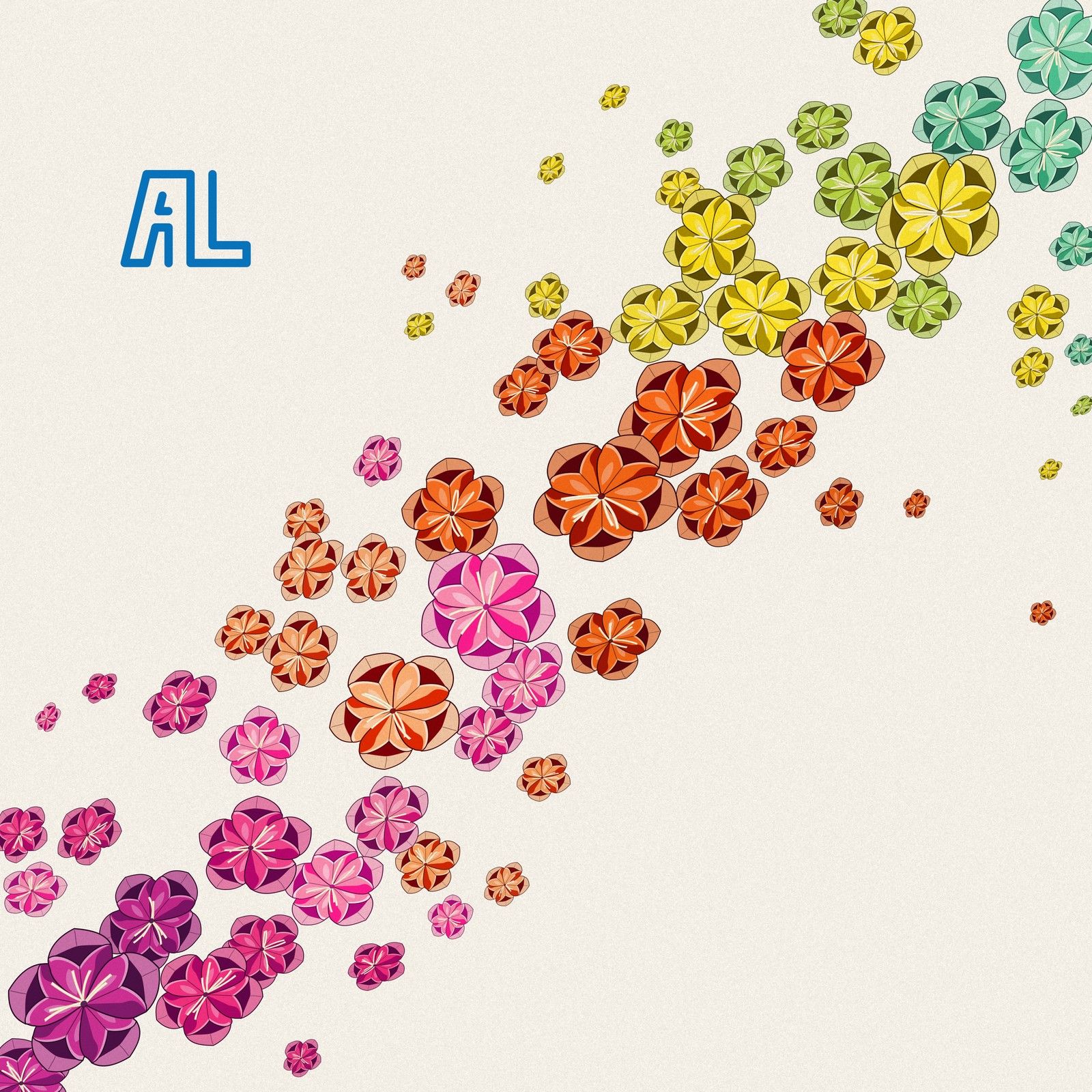
  • Paper flowers streaming diagonally across paper from bottom left to top right, magenta through yellow to mint
    Falling A scatter thinned to a diagonal river, every flower leaning the same way and growing toward the band’s centre line.

Two ways to render

The same hot-pink flower on the same paper, built twice. Flat is an SVG, the petals cel-shaded paths. Solid is a Blender scene where each petal is a real cone with a rolled rim, lit by a stepped toon ramp and outlined by Freestyle, so neighbouring petals slot physically between each other.

  • One hot-pink kusudama flower rendered in 3D on paper, with the aubertlone monogram
    Solid Blender, toon ramp, Freestyle lines
  • One hot-pink kusudama flower drawn flat as vector art on paper, with the aubertlone monogram
    Flat SVG, cel-shaded paths

Try the angle

The field on the home page is Vogel’s model: each new flower turns 137.508° from the last and steps outward by the square root of its number. That angle, the golden angle, is the one sunflowers use, and the pattern depends on it entirely. Nudge it a degree either way and the spiral falls into spokes.

Tools

Python and numpy for the generators, Blender for the solid flowers and the cloud, SVG as the form everything is kept in. All of them free.

The pileus

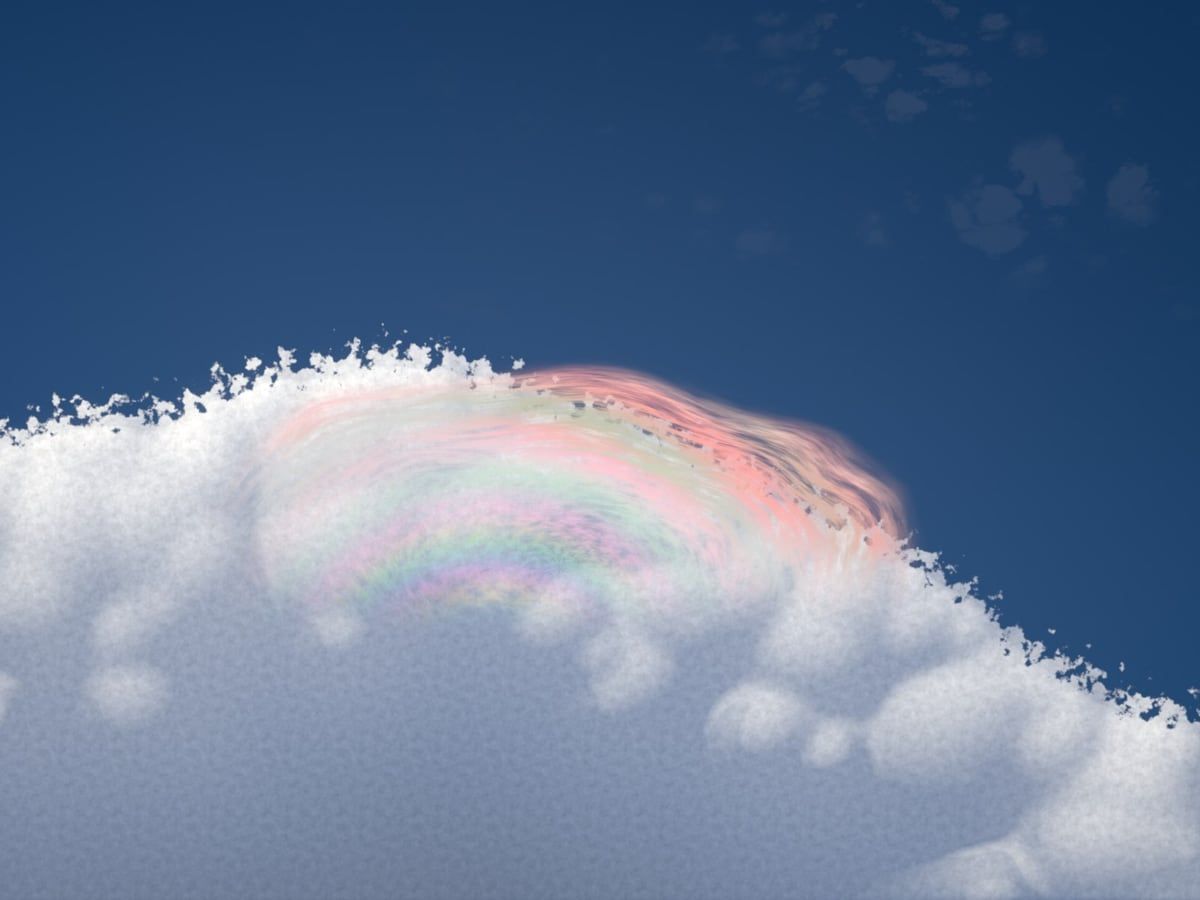
A sunlit cumulus tower under a thin cap of cloud whose pink and green colour bands follow the cap’s curve against a deep blue sky

A pileus is a thin cap of cloud lifted on top of a growing cumulus. When its water droplets are all nearly the same size, sunlight diffracts through it into bands of colour that follow the cap’s curve, like a corona around the moon stretched over a cloud. Instead of photographing one, I computed it: Mie scattering of sunlight by 12-micron droplets gives the colour of every band, and the cumulus, the cap and the bands are generated from that physics. The same cloud exists four ways: a physics render, a Blender volumetric, a cut-paper cover, and a live shader.

Live

A frame of the live pileus shader: a soft cumulus tower with a translucent iridescent cap, pink and green bands curving over its shoulder

The shader form: the whole scene is one fragment program, sky, tower and cap computed for every pixel, with nothing drawn by hand but the tower’s profile. Move the cursor over it to shift the sun. It only runs while it is on screen, and under reduced motion it stays a still.

Droplet radius
12 µm, read from the spacing of the fifth and sixth bands
Colour
Mie theory for water, n = 1.333, 380–730 nm, D65 daylight, CIE 1931 observer
Shader
About 3.5 ms a frame at 1080p on an M5 Pro; 60 fps on integrated GPUs

How it was worked out

The plate: Mie colour tables for 8 to 16 µm droplets and for different size spreads, the Airy approximation beside the full Mie result, the measurements taken from the reference photo (positions and ratios only; the renderer never opens it), and the first renders with a droplet-size sweep.

A dark plate of colour strips, a measurement diagram of ring centres over a cloud profile, and seven procedural renders of an iridescent cap on a cumulus

The same cloud, five ways

  • Physics render: a soft white tower with a pastel iridescent cap against a blue gradient sky
    Physics A 2D render in numpy. The cap’s colour is the Mie table indexed by the angle from a sun hidden behind the tower.
  • Blender render: a volumetric cumulus with a translucent lens-shaped cap banded in pastel colours
    Blender A volumetric cumulus in Cycles, the cap a thin lens carrying the same table.
  • Cut-paper version: outlined paper cloud lobes on logo blue with a flat-banded vellum cap, white monogram bottom left
    Cut paper The kusudama sibling: stacked paper lobes and a vellum cap, the table cut into ten flat bands.
  • Merged render: the volumetric cumulus under the physics cap, pink and green arches over its shoulder
    Merge The Blender cloud under the physics cap: the most photographic of the five, and the picture at the top of this section.
  • Shader frame: a soft cumulus with a translucent iridescent cap, pink and green bands
    Shader One fragment program in WebGL, running above.

Droplet size

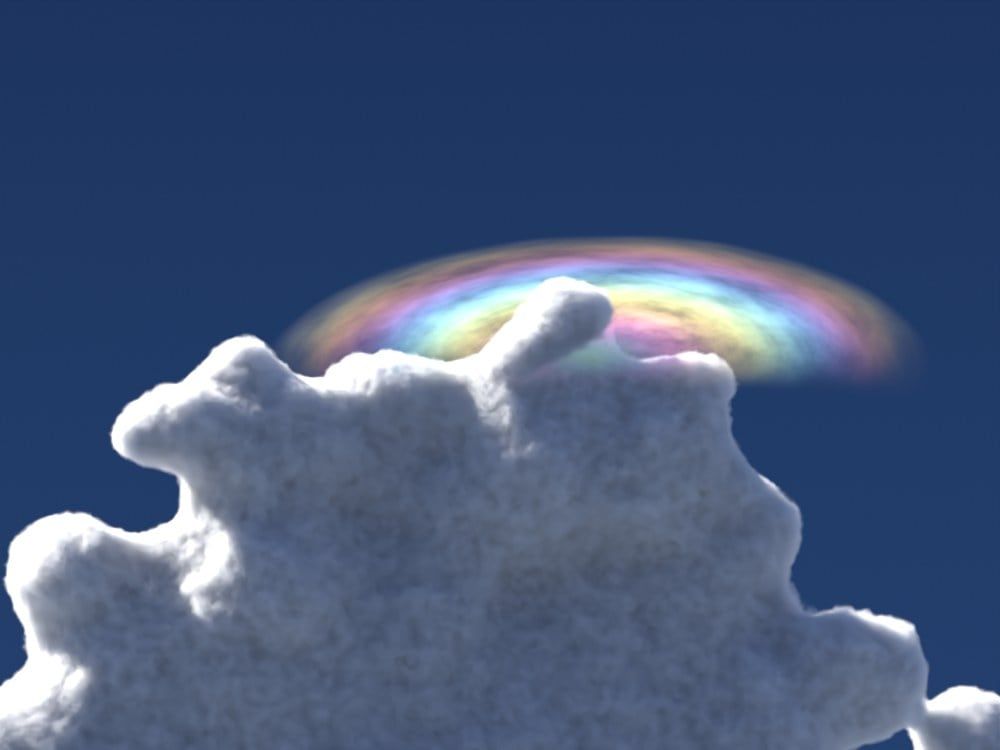
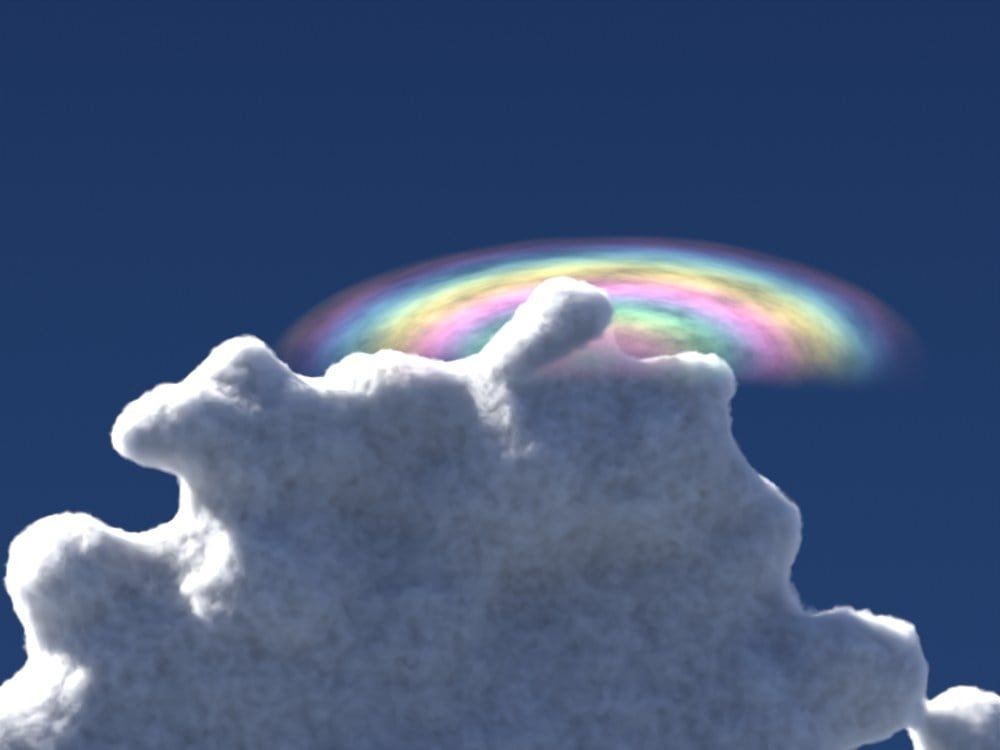
Change the droplet radius and the band count changes the way nature does: smaller droplets, wider rings. The three Blender frames differ in nothing else.

  • Blender pileus render with 8 micron droplets: wide, vivid bands
    8 µm
  • Blender pileus render with 12 micron droplets: pink, green and pink bands
    12 µm
  • Blender pileus render with 16 micron droplets: tight, pale bands
    16 µm

After an iridescent pileus cloud photographed over Palm Coast, Florida, September 2026.

The singles’ covers come from the same system. All the music →

Every picture on this site was generated procedurally, traced from one real photograph. No stock, no AI imagery.

viswa.one

Art · aubertlone

One photograph, then code.

Every picture on this site is procedural. The flowers descend from a 2014 phone photo of an origami bouquet, rebuilt as geometry so they can be anything. The cloud was never photographed at all: it is computed from the physics of light. No stock, no AI imagery.

Paper Flowers

The photograph

In 2014 I photographed a bouquet of kusudama flowers, each one five paper cones glued into a ball, on a phone. Someone else is in the frame, so the photo itself never appears. Everything on this site that looks like a paper flower descends from it: the colours, the arrangement, the way a rolled petal catches light.

Palette-true vector trace of the original bouquet photograph
Palette-true vector trace of the original bouquet photograph, on logo blue
The first step was a faithful vector trace. The pixels are quantised to thirty-six paper colours, each colour traced on its own and kept as its own group, so a whole family of petals can be recoloured with one edit, and everything outside the bouquet becomes a single flat field, paper or logo blue. These two traces are as close to the photograph as the site gets.

One flower, seventeen papers

Then the flower was rebuilt from nothing. Five petals at 72°, each a cone with a rolled lip, drawn in six flat cel tones: base, shadow, mouth, wall, highlight and line. All six come from one hex in HLS space, with shadows bent toward blue, except the yellows and limes, which bend toward orange, because a blue bend takes yellow through olive. The palette is the photograph’s own, found by clustering its paper pixels and lifted a little, since the photo was underexposed.

pinkhot pinkmagentaredorangepeachyellowcreamlimegreenminttealcyanskyroyalnavypurplelogo blue

The layouts

Many flowers need a rule for where each one goes. These are the rules, each shown once as a study. The two that became covers, Saturater and Sol Mara, live on the Music page with their releases.

  • A dense head of paper flowers in a sunflower spiral, navy at the centre through magenta and orange to yellow at the corners
    Vogel phyllotaxis Flower n sits at radius √n and angle n × 137.508°, the golden angle. Sizes follow the local spacing; here the colour runs in radial bands, like a dahlia.
  • Paper flowers along a single logarithmic spiral arm on paper, large at the rim and tiny at the centre
    Log spiral A nautilus arm: every flower a constant ratio further out than the last, so the arm shrinks inward without ever ending.
  • A wreath of paper flowers in a hue sweep on paper, open in the middle
    Wreath Flowers on a ring, each leaning outward, the hue sweeping once around the circle.
  • A grid of hot-pink paper flowers that is orderly at the top left and dissolves into scattered, mixed colours at the bottom right
    Schotter A 13 × 13 grid whose jitter, rotation, scale and colour chaos all grow from the top-left corner to the bottom-right, after Georg Nees’s 1968 plotter piece of the same name.
  • Paper flowers of three sizes scattered evenly across paper, colour shifting diagonally from navy to magenta, with one large flower off centre
    Poisson scatter Poisson-disk sampling keeps every flower a minimum distance from its neighbours, which is why random here reads as even rather than clumped. One hero flower clears the ground beneath it.
  • A ring of paper flowers on paper whose colour runs through the whole palette around the circle
    Rainbow sweep The Vogel head again, cropped to a ring, with the colour running around the circle through all seventeen papers in hue order.
  • Paper flowers streaming diagonally across paper from bottom left to top right, magenta through yellow to mint
    Falling A scatter thinned to a diagonal river, every flower leaning the same way and growing toward the band’s centre line.

Two ways to render

The same hot-pink flower on the same paper, built twice. Flat is an SVG, the petals cel-shaded paths. Solid is a Blender scene where each petal is a real cone with a rolled rim, lit by a stepped toon ramp and outlined by Freestyle, so neighbouring petals slot physically between each other.
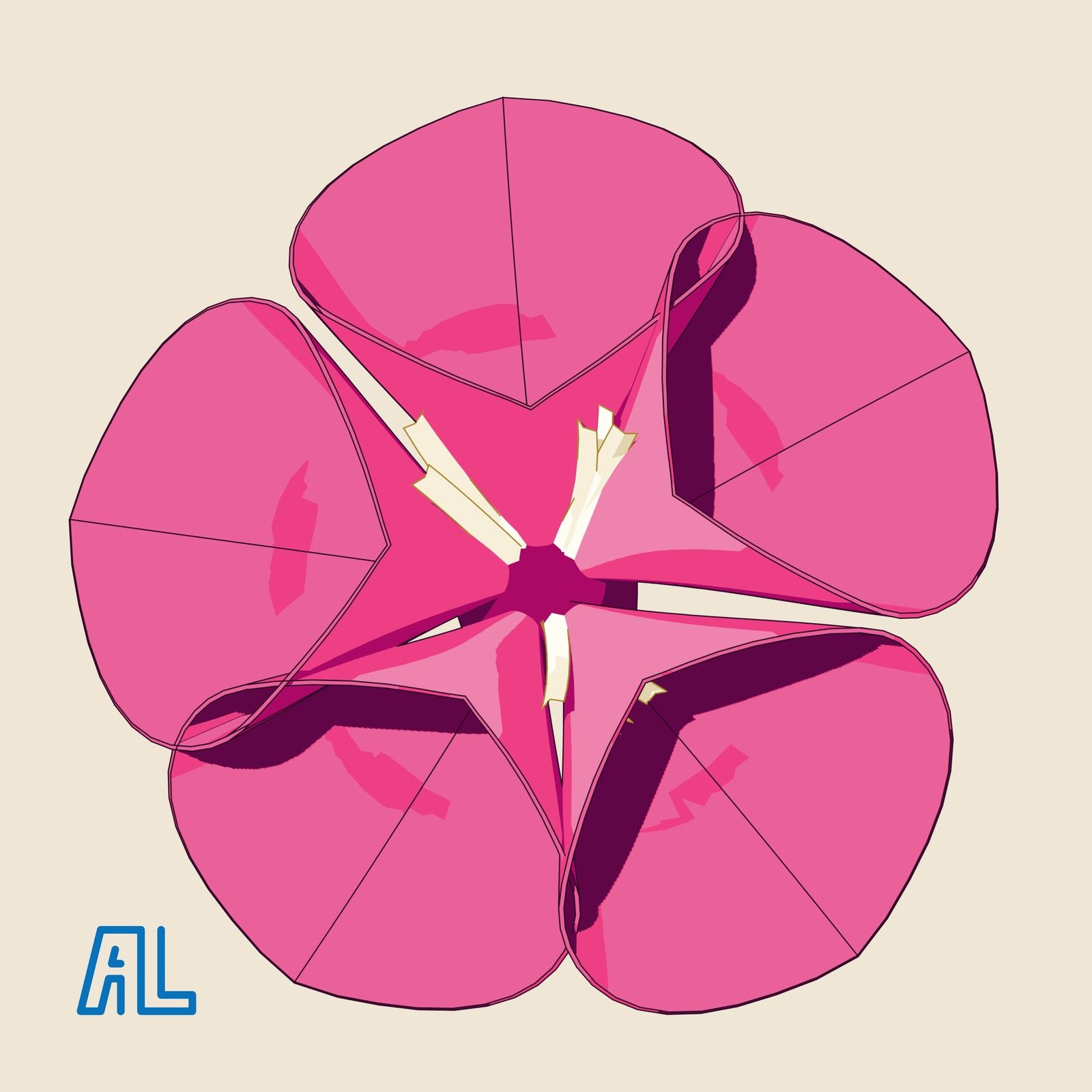
  • One hot-pink kusudama flower rendered in 3D on paper, with the aubertlone monogram
    Solid Blender, toon ramp, Freestyle lines
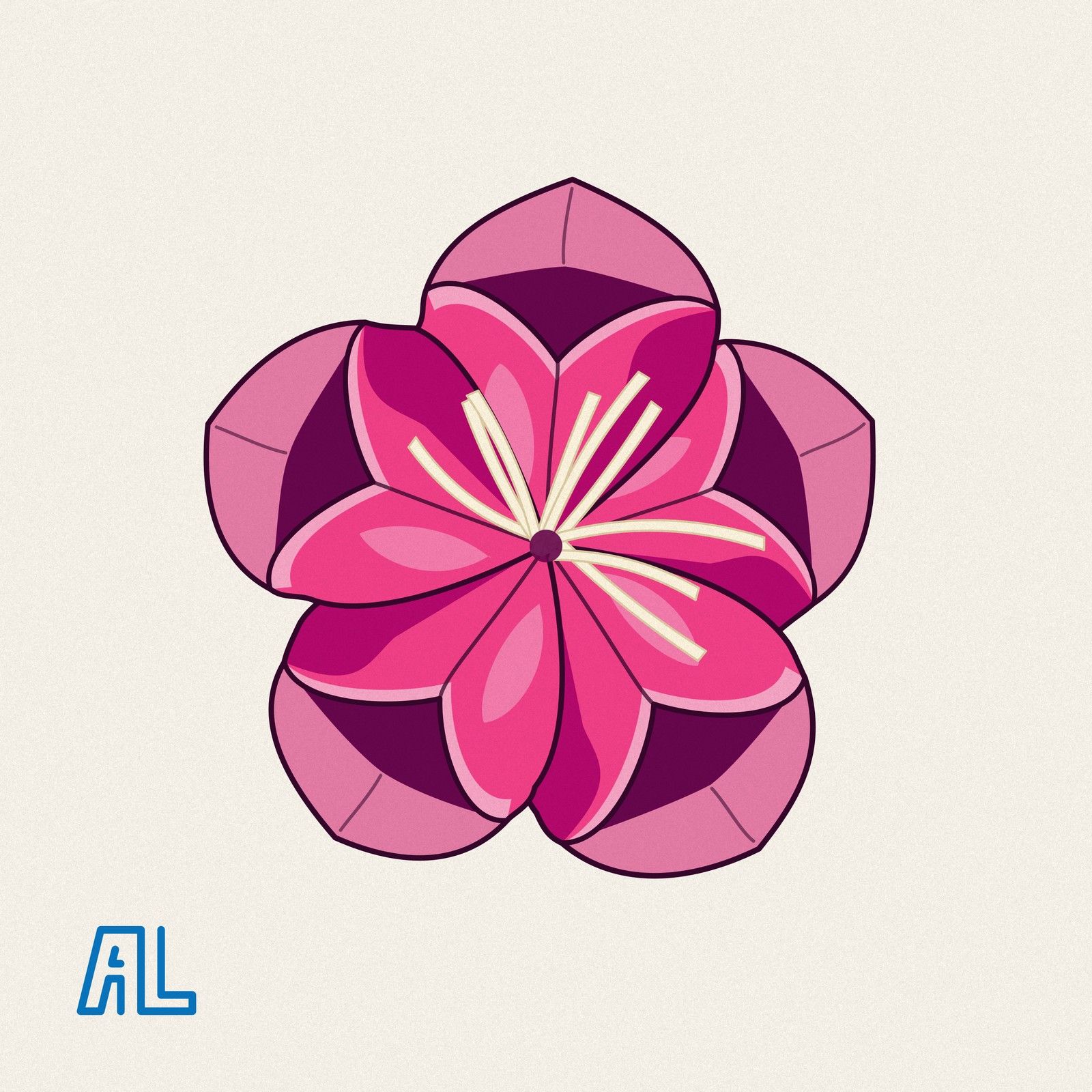
  • One hot-pink kusudama flower drawn flat as vector art on paper, with the aubertlone monogram
    Flat SVG, cel-shaded paths

Try the angle

The field on the home page is Vogel’s model: each new flower turns 137.508° from the last and steps outward by the square root of its number. That angle, the golden angle, is the one sunflowers use, and the pattern depends on it entirely. Nudge it a degree either way and the spiral falls into spokes.

Tools

Python and numpy for the generators, Blender for the solid flowers and the cloud, SVG as the form everything is kept in. All of them free.

The pileus

A sunlit cumulus tower under a thin cap of cloud whose pink and green colour bands follow the cap’s curve against a deep blue sky

A pileus is a thin cap of cloud lifted on top of a growing cumulus. When its water droplets are all nearly the same size, sunlight diffracts through it into bands of colour that follow the cap’s curve, like a corona around the moon stretched over a cloud. Instead of photographing one, I computed it: Mie scattering of sunlight by 12-micron droplets gives the colour of every band, and the cumulus, the cap and the bands are generated from that physics. The same cloud exists four ways: a physics render, a Blender volumetric, a cut-paper cover, and a live shader.

Live

A frame of the live pileus shader: a soft cumulus tower with a translucent iridescent cap, pink and green bands curving over its shoulder

The shader form: the whole scene is one fragment program, sky, tower and cap computed for every pixel, with nothing drawn by hand but the tower’s profile. Move the cursor over it to shift the sun. It only runs while it is on screen, and under reduced motion it stays a still.

Droplet radius
12 µm, read from the spacing of the fifth and sixth bands
Colour
Mie theory for water, n = 1.333, 380–730 nm, D65 daylight, CIE 1931 observer
Shader
About 3.5 ms a frame at 1080p on an M5 Pro; 60 fps on integrated GPUs

How it was worked out

The plate: Mie colour tables for 8 to 16 µm droplets and for different size spreads, the Airy approximation beside the full Mie result, the measurements taken from the reference photo (positions and ratios only; the renderer never opens it), and the first renders with a droplet-size sweep.

A dark plate of colour strips, a measurement diagram of ring centres over a cloud profile, and seven procedural renders of an iridescent cap on a cumulus

The same cloud, five ways

  • Physics render: a soft white tower with a pastel iridescent cap against a blue gradient sky
    Physics A 2D render in numpy. The cap’s colour is the Mie table indexed by the angle from a sun hidden behind the tower.
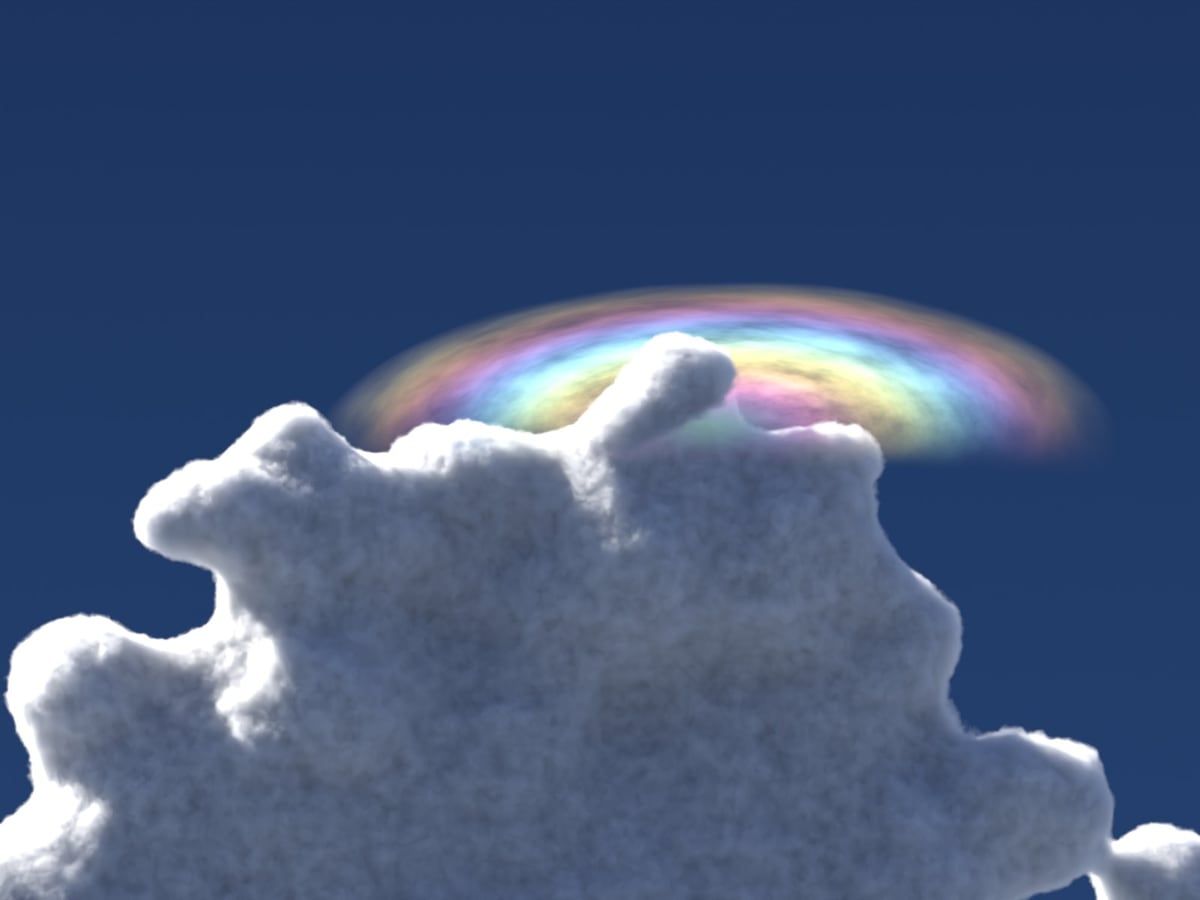
  • Blender render: a volumetric cumulus with a translucent lens-shaped cap banded in pastel colours
    Blender A volumetric cumulus in Cycles, the cap a thin lens carrying the same table.
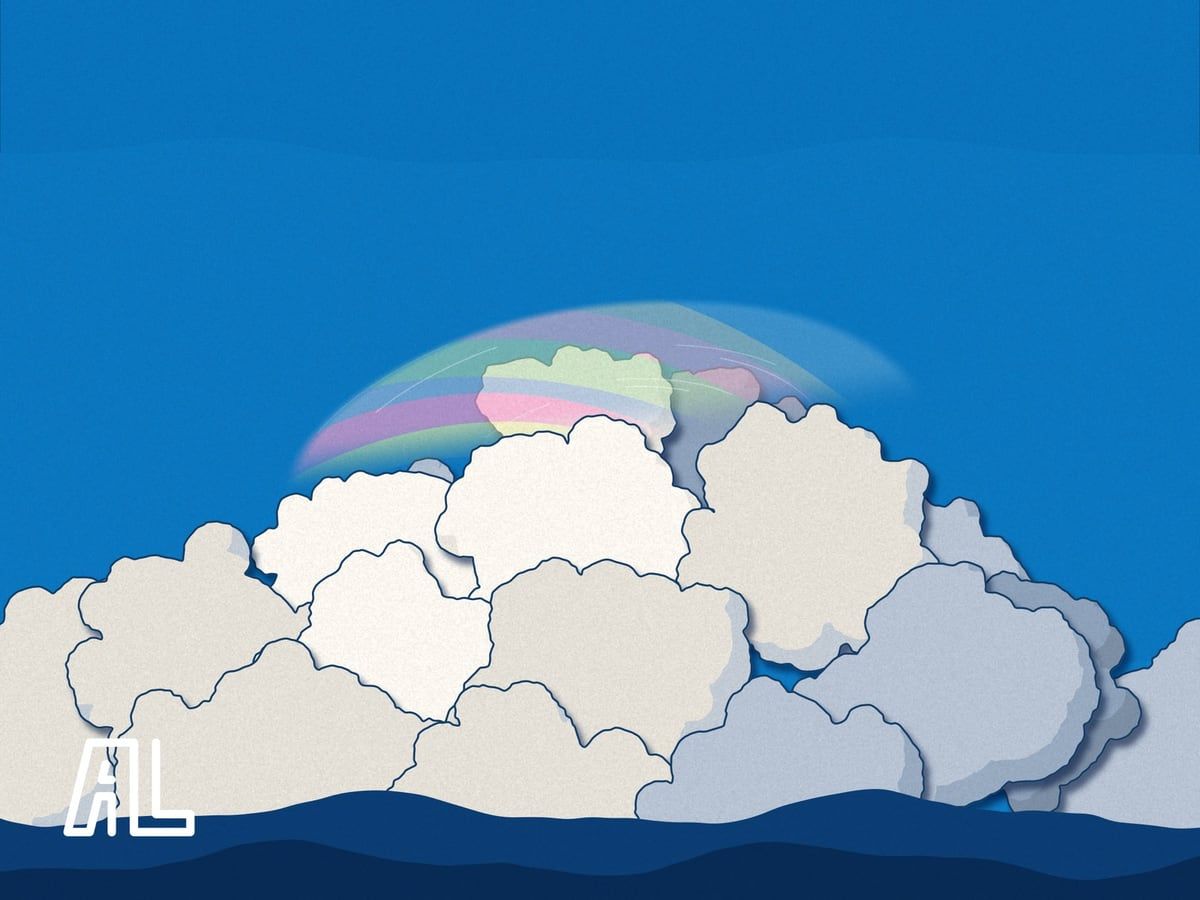
  • Cut-paper version: outlined paper cloud lobes on logo blue with a flat-banded vellum cap, white monogram bottom left
    Cut paper The kusudama sibling: stacked paper lobes and a vellum cap, the table cut into ten flat bands.
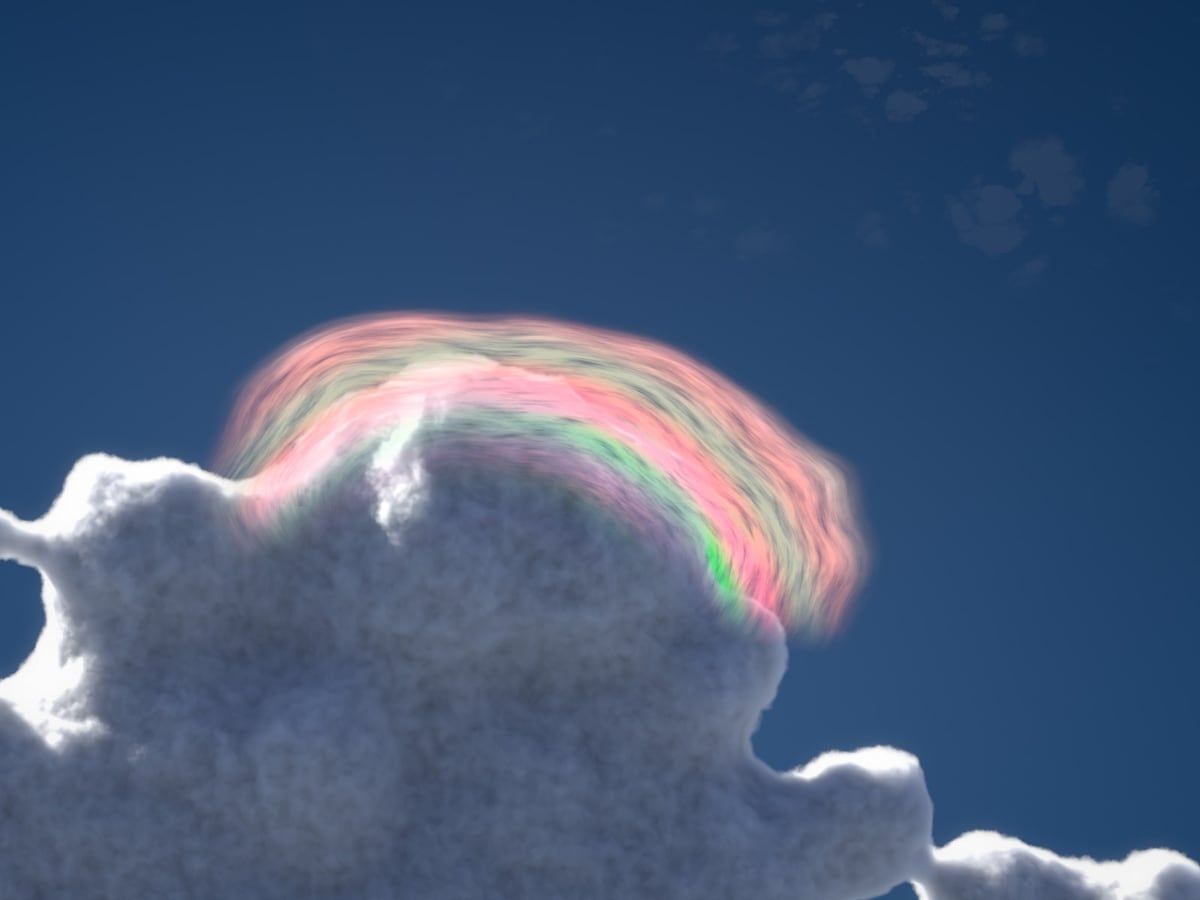
  • Merged render: the volumetric cumulus under the physics cap, pink and green arches over its shoulder
    Merge The Blender cloud under the physics cap: the most photographic of the five, and the picture at the top of this section.
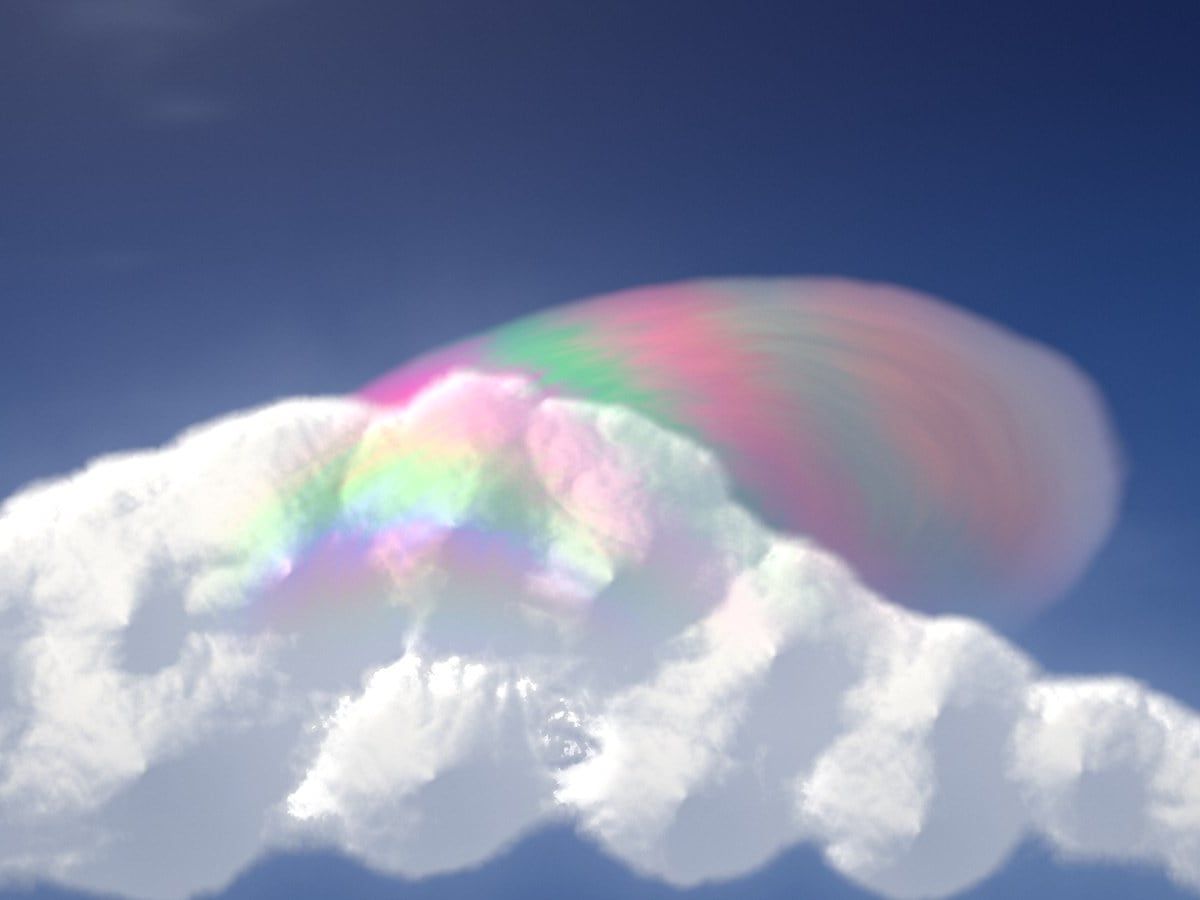
  • Shader frame: a soft cumulus with a translucent iridescent cap, pink and green bands
    Shader One fragment program in WebGL, running above.

Droplet size

Change the droplet radius and the band count changes the way nature does: smaller droplets, wider rings. The three Blender frames differ in nothing else.
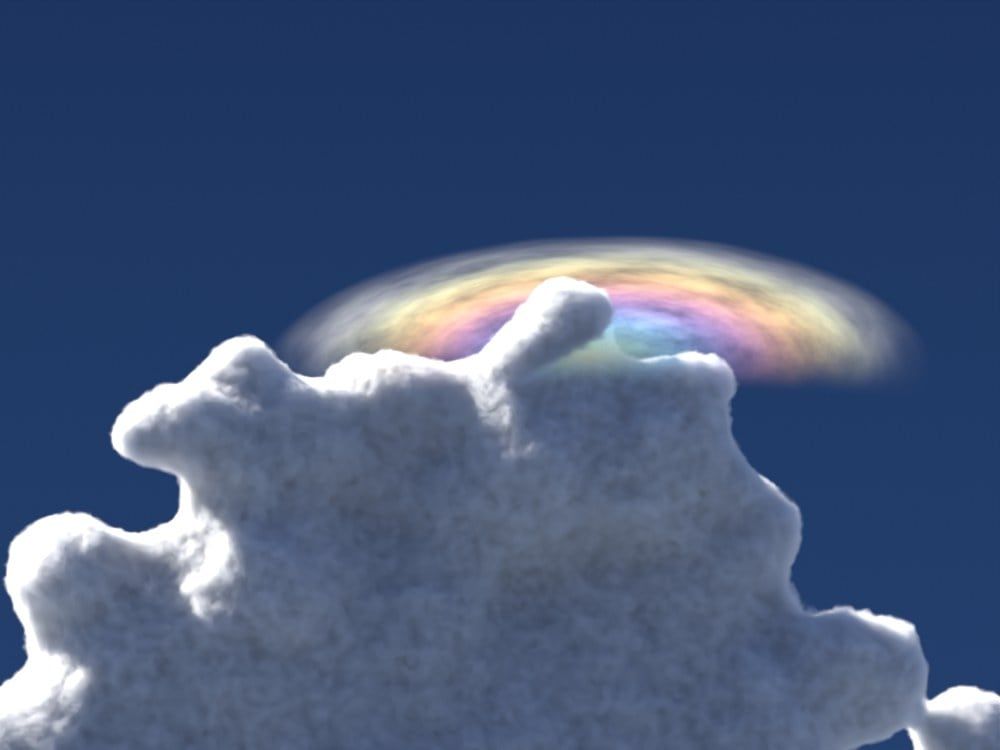
  • Blender pileus render with 8 micron droplets: wide, vivid bands
    8 µm
  • Blender pileus render with 12 micron droplets: pink, green and pink bands
    12 µm
  • Blender pileus render with 16 micron droplets: tight, pale bands
    16 µm

After an iridescent pileus cloud photographed over Palm Coast, Florida, September 2026.

The singles’ covers come from the same system. All the music →

Every picture on this site was generated procedurally, traced from one real photograph. No stock, no AI imagery.